Heavy Ink began in Shkodër, long before it became a name across two cities.
At its core was a simple idea: create a place where tattooing could be approached for what it is — a craft, an art form, and something intensely personal to the person who chooses to wear it.
As the studio grew, so did the work around it. What started in Shkodër eventually found a second home in Tirana, bringing together a wider collective of artists without trying to make them look, work or think the same.
Today, that range has become part of Heavy Ink's identity.
Across the two studios, the work moves from black-and-grey realism and geometric composition to fineline, microrealism, illustration, dotwork and color. Large-scale pieces sit beside tattoos measured in centimeters. Highly technical realism exists alongside work that feels as immediate as a drawing pulled from a sketchbook.
There is no single Heavy Ink aesthetic.
There is a standard.
A respect for technique. An understanding of composition and placement. And the belief that a tattoo should feel considered at every scale — whether it takes several sessions to complete or occupies only a few centimeters of skin.
But technique is only where the conversation starts.
The idea becomes the work
People rarely walk into a tattoo studio with the same kind of idea.
Sometimes it's a photograph that has been sitting in a camera roll for years. A reference to a painting. A lyric. A person. A place. Something drawn badly on a piece of paper that somehow explains exactly what they mean.
Sometimes it's simply an image they can't stop thinking about.
Heavy Ink's approach isn't to force those ideas into a house style. It's to find the artist whose way of seeing them makes sense.
That distinction matters.
Each artist within the collective has developed a visual language of their own. One might interpret an idea through realism and contrast; another through geometry and structure. Elsewhere it becomes a fine line, an illustration, a miniature composition or something entirely unexpected.
The client brings the starting point.
The artist gives it a language.
And somewhere between the two, the tattoo becomes something neither would have created alone.
Two cities. One collective.
The first Heavy Ink opened in Shkodër.
It is where the studio's identity began — through the work being made, the artists making it and the people who trusted them with their skin.
Tirana came later, not as a reinvention, but as an evolution.
A second studio meant more room, more artists and more perspectives, while keeping intact the philosophy that shaped the original.
The spaces themselves reflect that thinking.
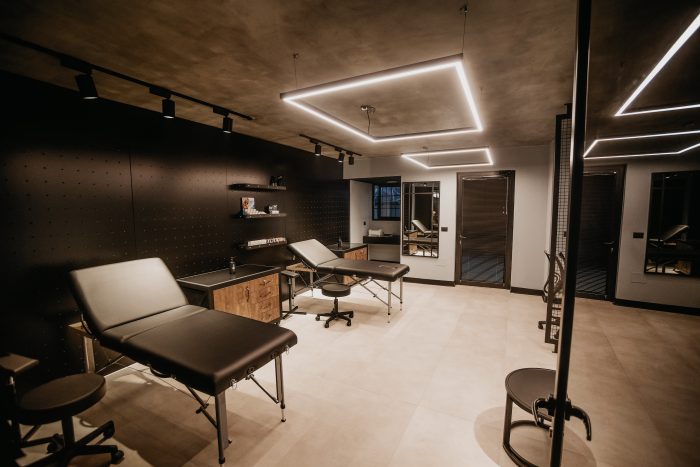
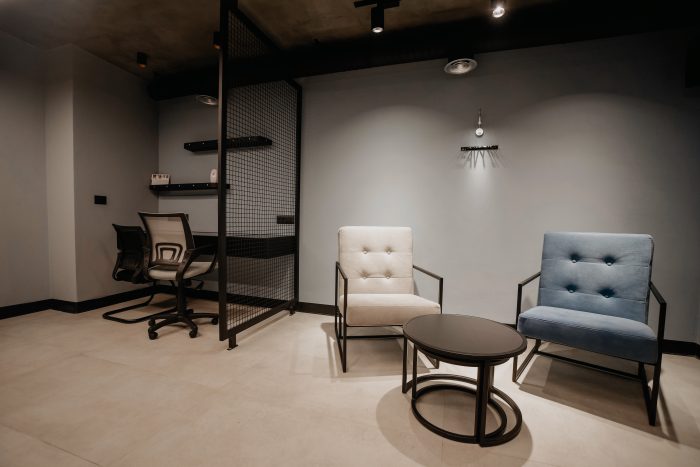
Concrete and black steel meet warm wood, deliberate lighting and artwork throughout. Industrial, but not cold. Designed, but never so polished that you forget what happens inside.
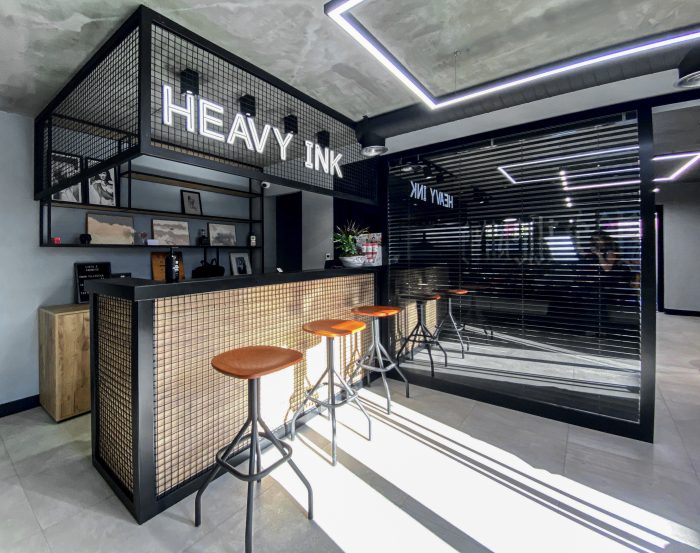
Because these aren't galleries built for looking at art from a distance.
They're places where it gets made.
Hours are spent here drawing, changing proportions, moving a stencil by a few millimeters, tattooing, talking, taking breaks and occasionally abandoning the original plan because something better emerged along the way.
The space exists around that process.
The people behind the needles
Heavy Ink is ultimately less about a particular style than the people practicing it.
The collective brings together artists whose work can look radically different from one another — and deliberately so.
Individuality isn't something the studio tries to edit out.
It is what allows someone to come through the door with almost any idea and find an artist capable of approaching it from a perspective that feels right.
And while the work is taken seriously, the studio doesn't need to take itself too seriously.
Tattooing is personal enough already. The experience around it should feel open, collaborative and human.
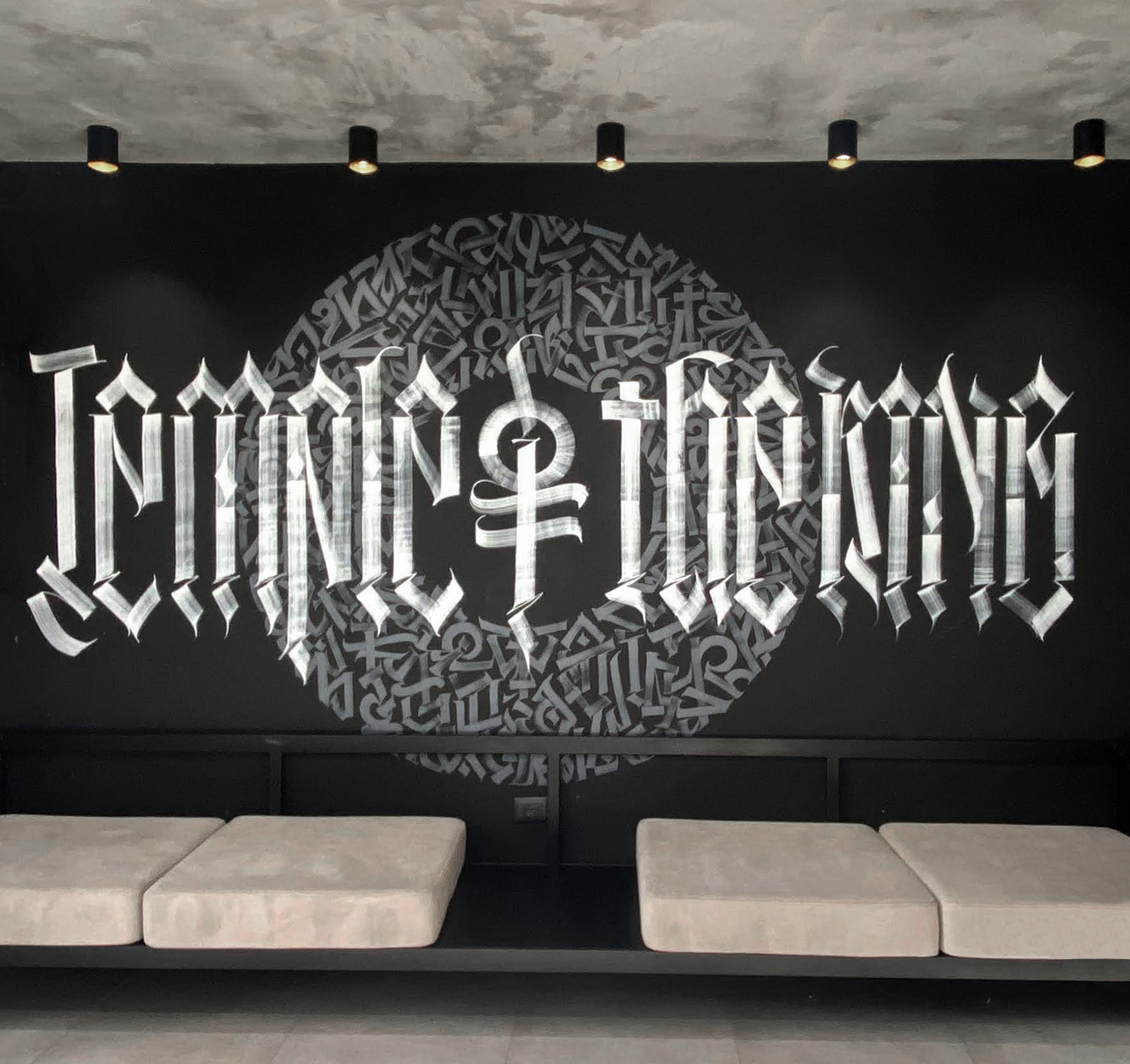
You might leave with something deeply symbolic.
You might leave with something beautifully unnecessary.
You might leave with both.
What matters is that when you do, it feels like it could only have been yours.
Heavy Ink
Born in Shkodër. Growing in Tirana.
Different artists. Different languages. One commitment to the work.